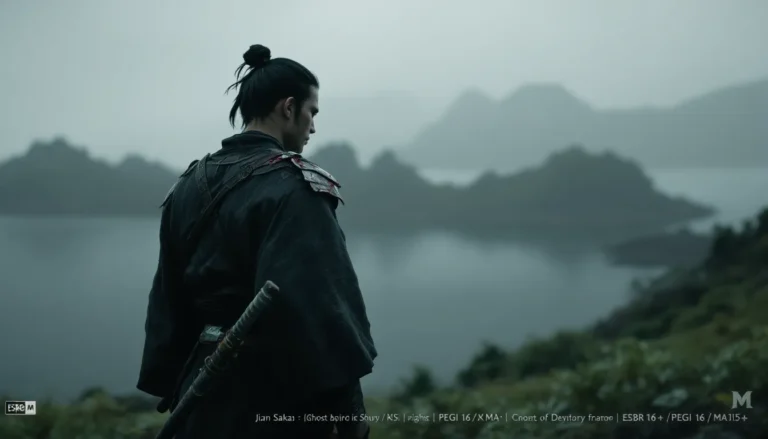
Ghost of Tsushima forces one of gaming‘s most brutal philosophical questions: can honor survive in hell? As Jin Sakai, you’re caught between traditional samurai code and the desperate need to save Tsushima from Mongol invasion. The game’s honor system isn’t just window dressing, it’s a mechanical backbone that fundamentally reshapes how you fight, what abilities you unlock, and even how characters perceive you. Whether you’re going full samurai with direct confrontations or embracing the way of the Ghost through shadow assassinations, your honor choices ripple through the entire experience. Understanding this system isn’t about finding the “right” way to play: it’s about consciously building the Jin Sakai you want to become.
Table of Contents
ToggleKey Takeaways
- Ghost of Tsushima’s honor system is a hidden stat (0–100) that silently tracks whether Jin plays as a traditional samurai or embraces dishonorable Ghost tactics, without penalizing either playstyle’s effectiveness.
- Direct combat and duels increase honor and unlock powerful abilities like Heavenly Strike, while stealth kills and Ghost Weapons decrease honor but grant faster access to assassination and shadow abilities.
- Your honor level subtly influences NPC dialogue, character reactions, and narrative branches—characters like Lord Shimura notice your tactics and respond with disappointment or respect based on your choices.
- Pure Ghost builds (0–30 honor) excel at puzzle-like tactical gameplay with assassination chains and environmental kills, while high-honor samurai builds (60–100) reward dueling skills and reflexive parry-heavy combat.
- You can adjust your honor playstyle mid-game by shifting between direct engagement and stealth, letting you experiment with different roles without being permanently locked into your initial approach.
- Ghost of Tsushima’s honor system succeeds by making your choices mechanically and narratively meaningful, allowing both honorable and dishonorable playthroughs to feel like entirely different, complete games.
What Is The Honor System In Ghost Of Tsushima?
The honor system in Ghost of Tsushima is a hidden stat that tracks your moral decisions throughout the game. It’s not a traditional karma meter with a visible bar on your HUD, instead, it operates silently in the background, directly tied to your combat and approach choices. Your honor level ranges from 0 to 100, with 100 being maximum honor and 0 representing complete disgrace.
The system measures whether Jin follows the samurai code (honorable behavior) or abandons traditional values to do whatever it takes to save his homeland (dishonorable behavior). Every major action, from how you engage enemies to which abilities you pursue, nudges this meter in one direction or the other. The genius of the system is that it doesn’t punish you for either path. A low-honor Ghost can be just as effective in combat as a high-honor samurai. The honor system creates role-playing flexibility without penalizing your mechanical effectiveness.
Unlike many moral choice systems that track “good” and “evil,” Ghost of Tsushima’s honor mechanic is purely about playstyle philosophy. It’s the difference between dying in honorable combat versus winning through deception. Both are valid. The system forces you to define who Jin Sakai is, not through dialogue wheels, but through actions.
How Honor Affects Gameplay And Story
Your honor level directly influences what abilities you can unlock and how the narrative responds to your choices. This isn’t cosmetic, it fundamentally changes how you progress as a warrior.
Stances And Techniques Unlocked By Honor
Each of the four combat stances requires honor investment to unlock their most devastating techniques. Stone Stance (optimal against shield-wielding brutes) and Water Stance (best for multiple quick opponents) reward honorable play with enhanced unlock trees. Wind Stance (crowd control specialist) and Moon Stance (single-target executioner) similarly demand honor commitment for their deadliest moves.
The Heavenly Strike and Unblockable Attacks are two of the most powerful abilities in the game, and they’re gated behind honor requirements. If you’re purely stealthy, you’ll unlock these slower than an aggressive samurai would. Conversely, stealth specialists access Shadowstrike and Ghost Weapons (bombs, firecrackers, poison darts) much faster by maintaining low honor.
The mechanical trade-off is intentional. Honor unlocks direct, powerful techniques that reward you for standing your ground. Dishonor unlocks tools that let you control battlefields from the shadows. There’s no DPS advantage to either, just different tactical flavors.
Dialogue And Character Reactions
NPC dialogue shifts subtly based on your reputation. Characters like Lord Shimura notice whether you’ve been carving through Mongols with visible blade work or executing them silently from rooftops. These aren’t dramatic judgment moments: they’re understated jabs. Shimura references your tactics in conversations, his disappointment palpable if you’ve become the very thing samurai are supposed to resist, a ghost haunting the island rather than a man standing in daylight.
Your honor level also affects how Ghost of Tsushima’s story missions branch in subtle ways. Story-critical confrontations play out differently if you’ve developed a reputation for dishonorable tactics. Enemies might be more cautious, or certain NPCs might trust you less. The narrative doesn’t hard-lock you into outcomes, but it does acknowledge your path through environmental storytelling and NPC behavior.
How To Increase Your Honor
Building honor in Ghost of Tsushima is straightforward: play like a traditional samurai. Stand your ground, face enemies directly, and let your skill in combat speak for itself.
Facing Enemies In Direct Combat
The most reliable way to gain honor is engaging enemies head-on without stealth. Every kill you land in direct, open combat, where enemies see you coming, feeds your honor meter. This includes:
- Attacking from the front rather than backstabbing
- Using your katana in stand-offs and duels
- Engaging large groups without first thinning them with stealth kills
- Holding your ground during standoffs instead of fleeing
The scale matters. Eliminating a single archer directly gives you honor. Eliminating the same archer silently from 50 meters away does not. The honor system rewards risk-taking and visible combat engagement.
Defeating Duel Opponents
Duels are the purest form of honorable combat. When you accept a duel (blue marker duels on your map), you’re committing to one-on-one samurai combat without interference. Winning any duel provides a substantial honor bump. These showdowns against named opponents like Yasuhiro the Archer, Takeda the Archer, and Masako the Spear Master all reward honor.
Honor from duels scales with difficulty. Winning a duel on Hard mode gives more honor than Moderate mode. The game respects the risk you’re taking in pure swordplay. If you’re rushing duels and winning easily, your honor gain is modest. If you’re genuinely challenged and triumph, honor accumulates faster.
Completing Honorable Objectives
Certain main story missions and side activities are inherently honorable in their design. Liberating enemy camps using loud, direct approaches rather than ghost tactics grants honor. Completing Ghost of Tsushima’s main narrative while favoring samurai methods over stealth options contributes to your honor standing.
Specific quest markers sometimes present honorable vs. dishonorable branches. Choosing the honorable path, whatever that means contextually, nudges your honor up. You won’t see a popup confirming this: the system tracks silently.
How To Decrease Your Honor
Dropping your honor is the inverse of raising it: embrace tactics that samurai are supposed to reject. Stealth, deception, and underhanded methods are the way of the Ghost, not the way of the samurai.
Using Stealth And Assassination Techniques
Every time you eliminate an enemy without them seeing you, whether through Shadowstrike, backstabs, or environmental kills, you decrease honor. The more kills you chain together stealthily, the faster honor drops. A perfectly executed encounter where you ghost through a camp without triggering combat gives you massive dishonor gain.
Ghost Weapons like bombs, kunai, and poison darts that don’t trace back to you visibly also erode honor. These tools exist for dishonorable advantage, they’re designed to kill without standing in front of your enemy.
Employing Underhanded Tactics
Beyond stealth, dishonor accumulates through tactics like:
- Using poisoned weapons to kill enemies without direct confrontation
- Employing smoke bombs to disengage and slip away
- Triggering chain assassinations where you’re never visible to your targets
- Using environmental kills (pushing enemies off ledges, triggering traps) where they never see you
The core philosophy: if you win without the enemy knowing you were there, honor drops. The faster and cleaner your ghost tactics, the faster your dishonor accumulates. Some players intentionally tank their honor early, getting access to all ghost abilities by Act 1, trading the honor-gated samurai abilities for pure stealth dominance.
The Way Of The Ghost: Embracing Dishonorable Playstyles
Low honor isn’t a punishment, it’s a different power fantasy. The way of the Ghost trades visible samurai dominance for invisible lethal efficiency.
Strategic Advantages Of Low Honor Builds
A pure Ghost build (0-30 honor) excels at specific tactical scenarios:
- Assassination chains eliminate entire camps without triggering reinforcements
- Ghost Weapons let you control enemy positions from stealth, forcing them into traps or each other
- Stealth armor perks stack faster, giving you massive invisibility and damage bonuses from shadows
- Enemy camps can be cleared without a single confrontation, preventing reinforcements
Where the Ghost shines is in encounters with uneven odds. A samurai facing 6 Mongol swordsmen in direct combat relies on perfect parries and positioning. A Ghost eliminates them before they know they’re being hunted. There’s no moral judgment here, just different tools for different jobs.
For players who enjoy puzzle-like camp liberation (analyzing patrol routes, coordinating kills, orchestrating takedowns), the Ghost build is mechanically superior. You’re rewarded for planning and execution over reflexes.
Ghost Armor And Equipment
The Ghost Armor unlock is the symbolic payoff for dishonorable play. This black armor set becomes available once you hit Act 2 and have low honor. It’s a visual manifestation of your abandonment of samurai values, a literal ghost suit that makes you nearly invisible at night.
Ghost armor isn’t mechanically overpowered compared to samurai armor, but it synergizes perfectly with stealth playstyles. Ghost perks boost assassination damage, reduce detection range, and improve poison effectiveness. If you’re already playing stealthily, Ghost armor completes the build.
The psychological payoff is massive, though. Putting on Ghost armor after chapters of honorable play is a narrative turning point. Jin visibly becomes the thing Shimura fears, a legend of darkness rather than a samurai defending his homeland. The game lets you see that transformation reflected in your equipment loadout.
Balancing Honor For Optimal Gameplay
Most players land somewhere between pure samurai (100 honor) and pure Ghost (0 honor). The sweet spot depends on your preferred playstyle and which abilities matter most to you.
Finding Your Playstyle
Consider what combat situations you find most engaging. If you love extended sword duels and parry-heavy combat, you’ll want honor in the 60-100 range to unlock Heavenly Strike and advanced stance techniques faster. These abilities turn Jin into an unstoppable duelist, perfect for players who want to prove their skill against tough opponents.
If you prefer methodical, tactical gameplay where you’re analyzing patrol patterns and orchestrating kills, aim for honor in the 0-40 range. You’ll get early access to ghost abilities that reward planning. The challenge becomes outsmarting enemy AI rather than out-timing their attacks.
Mixed builds (40-60 honor) are viable for players who want flexibility. You’ll progress through both ability trees at moderate speed, letting you swap between samurai and Ghost tactics depending on the situation. This approach sacrifices early specialization for overall versatility.
Mid-Game Adjustments And Strategies
Your honor isn’t locked in. You can shift your playstyle in Acts 2 and 3 if you realize your initial approach isn’t clicking. Played honorably through Act 1 but want to try stealth? Start taking Ghost contracts and embracing assassination. The honor meter will drop, unlocking stealth abilities you skipped.
Conversely, if you went full Ghost early and now miss sword combat, switch to direct engagements and duels. Honor climbs back up. The game rewards role-playing commitment but doesn’t punish experimentation.
One practical consideration: certain side quests and optional activities tie to honor thresholds. Completing them in your preferred style matters more than hitting a specific honor number. If a side quest feels like it should be solved stealthily, do it that way and embrace the dishonor. The story and atmosphere matter more than maintaining a perfect stat balance.
Conclusion
Ghost of Tsushima’s honor system succeeds because it doesn’t force a playstyle on you. Whether you pursue Jin’s moral dilemma and the fight for honor through samurai righteousness or Ghost tactics, the game respects your choice mechanically and narratively.
Your honor level is a reflection of who you decide Jin Sakai becomes. It’s not about right or wrong, it’s about committing to a philosophy and experiencing how that choice reshapes the story, abilities, and character arcs around you. The brilliant part is that both extremes are viable, complete, and mechanically satisfying. A pure samurai playthrough and a pure Ghost playthrough feel like entirely different games, yet both tell the same story through different lenses.
As you progress through Tsushima, remember that honor and dishonor aren’t just about story flavor. They’re tools. They’re identity. They’re the mechanical expression of who Jin is becoming. Use them intentionally, and Ghost of Tsushima rewards you with one of gaming’s most philosophically rich choice systems, one that never explicitly tells you which path to take.