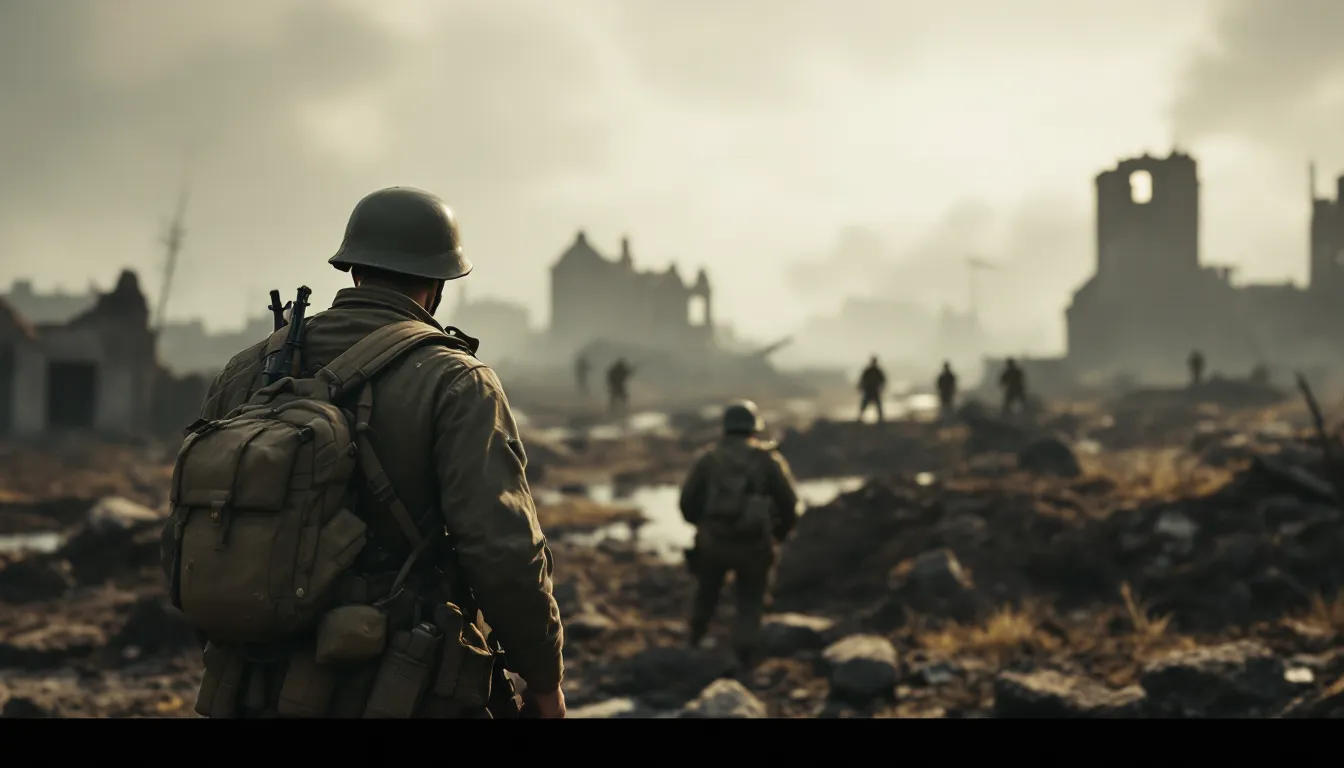
Call of Duty WW2 remains one of the most grounded and narratively rich entries in the franchise, even as the series has evolved into more experimental territory. Released in November 2017, this PS4 title stripped away the jetpacks, advanced movement, and futuristic gadgetry that defined earlier Modern Warfare sequels, bringing players back to the boots-on-ground chaos of World War II. For those revisiting the game in 2026 or jumping in for the first time, understanding what makes Call of Duty WW2 special, from its intense single-player campaign to its fast-paced multiplayer and the addictive Zombies mode, is key to getting the most out of your investment. Whether you’re chasing multiplayer wins, unraveling Zombies easter eggs, or experiencing the campaign’s compelling story, this guide covers everything you need to dominate on PS4.
Table of Contents
ToggleKey Takeaways
- Call of Duty WW2 on PS4 delivers three distinct experiences—a grounded campaign, balanced multiplayer, and deep Zombies mode—that remain engaging nearly a decade after launch.
- Master weapon attachments, scorestreaks, and loadout customization to elevate your multiplayer performance, as gunplay relies on accuracy and positioning rather than advanced movement mechanics.
- Zombies offers both accessibility for newcomers and complexity for hardcore players, with hidden easter eggs and cooperative strategies that reward teamwork and map knowledge.
- Lower your controller sensitivity to 4–7 and practice weapon recoil patterns consistently to gain competitive edges in multiplayer engagements and survive longer in Zombies.
- Call of Duty WW2 is ideal for players seeking a complete, finished game with no battle pass pressure or aggressive monetization, offering straightforward boots-on-ground gameplay that stands apart from modern live-service titles.
- The campaign’s character-driven storytelling and moral complexity make it worth experiencing, delivering emotional payoff through five to seven hours of focused narrative that emphasizes squad camaraderie over cinematic spectacle.
What Is Call Of Duty WW2?
Call of Duty WW2 is a first-person shooter developed by Sledgehammer Games and published by Activision. It marked the franchise’s return to the World War II setting after years of sci-fi detours, delivering a straightforward military experience grounded in historical events from 1944–1945. The game launched on PS4, Xbox One, and PC, and remains the definitive WW2 Call of Duty experience for console players.
The game prioritizes accessibility without sacrificing depth. Whether you’re a casual player jumping into multiplayer for a few matches or a competitive grinder hunting for prestige ranks, Call of Duty WW2 offers a structured progression system that rewards consistent play. The removal of wall-running, double-jumping, and other advanced movement mechanics means gunplay is faster and more straightforward, positioning and aim matter more than mobility tricks.
What sets this title apart is its three-pillar structure: a cinematic campaign with real stakes, multiplayer modes that range from casual to intensely competitive, and a Zombies mode that’s both accessible to newcomers and complex enough for hardcore fans to sink hundreds of hours into. On PS4, the game runs at a solid frame rate with tight controls that feel responsive even after years of post-launch updates.
Gameplay Overview And Core Mechanics
Call of Duty WW2 builds its foundation on classic three-lane multiplayer map design and reward-based progression. Unlike more recent Call of Duty titles, this game emphasizes raw gunfight skill over killstreak spam or overpowered scorestreaks. Time-to-kill (TTK) is intentionally high compared to modern entries, meaning engagements reward accuracy and trigger discipline rather than just reaction time.
The Create-a-Class system is where customization happens. You can equip a primary weapon, secondary weapon, lethal and tactical grenades, perks, and field orders (scorestreak equivalents). Perks are organized into three tiers, and you can use wildcards to break the traditional loadout rules, for instance, the Gunslinger wildcard lets you equip two primary weapons. This flexibility means there’s no single “meta loadout”: instead, your playstyle and map preference drive your choices.
Scorestreaks replace traditional killstreaks. These rewards activate when you earn a set number of points through kills, objective play, and headshots. Early streaks like UAV and Counter-UAV are staples, while higher-tier rewards include Carpet Bomber, Paratroopers, and the devastating Ball Turret Gunner. The key difference from killstreaks: scorestreaks reset if you die, but your points carry over into your next life. This encourages objective play and helps lower-skilled players feel rewarded even when they’re not going on massive killing sprees.
The gunplay itself is deliberate. Weapons have recoil patterns you’ll learn with practice, and attachments genuinely alter how a gun handles. An SMG with a grip attachment and quickdraw feels entirely different from the same gun without mods. This depth rewards weapon mastery and experimentation, keeping multiplayer fresh across hundreds of hours.
Campaign Mode: Story, Characters, And Missions
The Call of Duty WW2 campaign is a lean, focused experience that clocks in around 5–7 hours on standard difficulty. You play as Private Ronald “Red” Daniels, a young soldier who arrives in Europe during the final year of World War II. The story follows Daniels and his squad as they fight through France, Germany, and beyond, with personal moments woven between the large-scale combat set pieces.
What makes this campaign different from modern Call of Duty entries is its restraint. There are no exosuits, no sci-fi weapons, and no cinematic over-the-top moments that feel disconnected from the actual conflict. Instead, the narrative grounds itself in soldier camaraderie, moral complexity, and the human cost of war. Cutscenes blend seamlessly between gameplay and cinematics, maintaining immersion without constant loading screens.
Mission Structure And Objectives
Each campaign mission is structured around primary objectives and optional challenges. The primary path is straightforward: reach a location, defend a position, or retrieve an item. But the game rewards exploration and deviation. Hidden Commendations, essentially side objectives, provide context and character development. For example, one mission tasks you with destroying enemy supplies, but finding and destroying all supply caches unlocks additional dialogue that deepens understanding of the mission’s strategic importance.
Objective markers guide you, but they’re not intrusive. Players who want full freedom can disable HUD elements and rely on verbal squad callouts and compass navigation. This flexibility appeals to both casual players and those seeking a more immersive experience. Difficulty levels (Recruit, Regular, Hardened, Veteran) adjust enemy AI, health pools, and damage values. Veteran mode is genuinely challenging without feeling unfair, squad members rarely save you, and mistakes punish quickly.
Key Characters And Narrative Arcs
Private Daniels is your viewpoint character, but the real depth comes from your squad. Sergeant Pierson is your platoon sergeant, tough, pragmatic, and haunted by decisions he’s made. Lieutenant Turner is the idealistic officer trying to do everything by the book while the chaos of war demands compromise. There’s also Zussman, a fellow private who becomes Daniels’ best friend, and their bond feels genuine rather than forced.
The campaign explores themes of survival, leadership, and the moral gray areas of combat. Characters discuss the ethics of war, morale issues within units, and personal loss. By the finale, you’ve experienced genuine character development and understand why these soldiers matter. The ending won’t blow your mind with shock value, but it lands emotionally because you’ve spent five hours getting to know these people. This human-focused storytelling is why the campaign holds up in 2026, even though the gameplay is straightforward by modern standards.
Multiplayer: Maps, Modes, And Competitive Play
Multiplayer is where Call of Duty WW2 shines on PS4. Post-launch content expanded the map pool to 14+ multiplayer maps, each designed with clear three-lane layouts that encourage active gunfights rather than camping or defensive play. The meta has settled into predictable weapon choices, but balance patches (the last major update was in 2018) keep core gameplay stable and fair.
Popular Multiplayer Maps And Layouts
The most iconic multiplayer maps in Call of Duty WW2 include:
Carentan is a tight, close-quarters map built around a bombed-out French village. It’s SMG-dominant, with headglitch positions that frustrate newer players but reward skilled defenders.
Pointe du Hoc features massive cliffs overlooking bunkers and trenches. Long sightlines favor assault rifles and sniper rifles, while the center cave offers close-range engagements. Map control here is crucial.
Gustav Cannon is set at a German gun emplacement. The layout is wide, with multiple flanking routes and verticality. This is one of the most balanced maps, with viable playstyles across the full weapon spectrum.
Shipment is a chaotic, tiny map perfect for kill count farming and leveling new weapons. It’s pure madness, grenades rain constantly, and spawns are deliberately aggressive. Most competitive players avoid it, but casuals love the nonstop action.
Flak Tower and Gibraltar are medium-sized maps with good balance between long-range and close-quarters engagements. Both offer enough cover to prevent pure sniper dominance while rewarding accurate gunplay.
Larger maps like London Docks and Aachen accommodate 9v9 or larger game modes and encourage team coordination and killstreak chaining.
Game Modes And Objective-Based Gameplay
Call of Duty WW2 includes both traditional and unique modes:
- Team Deathmatch (TDM): First team to 75 kills wins. Pure gunfight focused, no objective distractions.
- Search and Destroy (S&D): 6v6 competitive mode with bomb plant/defuse mechanics. No respawns per round. This is the esports-focused mode where teamwork and communication shine.
- Hardpoint: Teams fight for control of a rotating position on the map. The Hardpoint changes location every 60 seconds, forcing constant repositioning.
- Domination: Capture and hold three flags (A, B, C) spread across the map. Most team-oriented mode.
- War: A unique objective-based mode where teams progress through sequential map stages. One team attacks, the other defends. Stages include planting bombs, escorting a tank, and capturing flags. War is a gateway mode for new players because it feels less punishing than standard multiplayer.
- Free-for-All: Chaotic 1v1v1v1… match where only you matter. Pure gunfight focused.
S&D and Hardpoint are the most competitive, while War and Domination are best for casual fun. TDM and FFA are solid for warming up or practicing specific weapons.
Weapons, Loadouts, And Class Customization
Weapon balance in Call of Duty WW2 is mostly solid, though a few picks dominate:
Assault Rifles are versatile across all ranges. The STG 44 and GPMG-7 are the safest picks for beginners, they have manageable recoil and solid damage. The GPMG-7 is a light machine gun that excels at medium range with extended magazine capacity.
Submachine Guns (SMGs) like the PPSH-41 and MP-40 rule close quarters. Add attachments like Quickdraw and Grip to control recoil, and they’re lethal in tight maps like Carentan.
Sniper Rifles (One-Shot Kills) are for experienced players. The Kar98k and Lee-Enfield demand precision, but a well-placed headshot wins any engagement. These are skill-expressive weapons.
Shotguns are niche but devastating. The Combat Shotgun and Toggle Action are room-clearers in objective modes like Domination, where you’ll encounter tightly clustered targets.
Light Machine Guns (LMGs) like the GPMG-7 and MG-42 excel at suppressing enemies and holding lanes. They sacrifice mobility for ammo capacity and sustained fire.
Pistols are secondary weapons. The Mauler Pistol is a semi-auto beast: some players even primary it.
For beginners, start with STG 44 + PPSH-41 as your primary/secondary combo, add Quickdraw and Grip to both, take Scavenger and Hardline perks, and use Lethal Grenade and Flashbang. This setup teaches proper gunplay mechanics without gimmicks.
Experienced players should master at least one weapon per category. Weapon mastery, understanding TTK, optimal engagement distance, and recoil patterns, is how you climb from average to above-average. A Call of Duty Black Ops PS4 comparison shows how different weapon balancing can feel between Call of Duty titles, making weapon selection even more crucial here.
Zombies Mode: Survival, Easter Eggs, And Strategy
Zombies is the third pillar of Call of Duty WW2, and it’s phenomenally deep. This round-based survival mode has spawned a dedicated community that’s still active in 2026. The mode is welcoming to newcomers but complex enough for hardcore players to optimize strategies across 100+ rounds.
Unlike campaign or multiplayer, Zombies forces cooperation (if playing multiplayer) and long-term planning. You’re dropped into a map overrun by undead Nazi zombies, and your goal is to survive as many rounds as possible. Killing zombies earns points used to unlock doors, purchase weapons, activate traps, and buy perks that boost your survivability.
Map Locations And Round-Based Survival
Call of Duty WW2 Zombies features four core maps:
Nacht der Untoten (Night of the Undead) is the classic map ported from the original Call of Duty WW2 Zombies. It’s a small German bunker perfect for learning fundamentals. Few doors, tight corridors, and predictable zombie spawns make it ideal for first-timers.
Gröesten Haus is a massive German mansion with multiple rooms, courtyards, and secret areas. Its size and complexity reward map knowledge and aggressive play. This is where advanced strategies emerge.
The Darkest Shore takes place on a beach defended by bunkers and trenches. Environmental hazards (gas and electrified water) add layer difficulty beyond pure zombie horde management.
The Final Reich is set in a factory overrun by undead experiments. This map features the most elaborate easter egg quest, rewarding exploration and puzzle-solving.
Round progression works similarly across all maps: each round spawns progressively more zombies with higher health pools. Early rounds (1–10) are warm-ups: by round 20, you’re under genuine pressure: by round 50+, it’s about managing spawns and maintaining weapon ammo. The typical goal for casual players is reaching round 20–30, while hardcore players target round 50 and beyond.
Hidden Easter Eggs And Secrets
Call of Duty WW2 Zombies is packed with easter eggs, hidden quests, lore, and references that reward curiosity. These aren’t just cosmetic: completing the main quest on each map unlocks lore-related cutscenes and sometimes grants in-game benefits like temporary buffs.
The Final Reich’s main quest involves collecting three runes, activating power switches, and defeating a boss. Completing it opens secret areas and provides context for the Zombies storyline. Guides exist online, but figuring out portions yourself is rewarding.
Gröesten Haus has a hidden area accessed by collecting items and solving puzzles. The payoff is a powerful weapon and environmental aesthetics that shift as you progress.
Minor easter eggs include hidden songs (triggering them plays vinyl records), wall writings that reference previous Call of Duty Zombies entries, and spawn mechanics tied to specific actions. The easter egg community remains active: if you get stuck, Push Square frequently publishes detailed guides.
The key is experimenting. Try unusual button combinations, interact with suspicious objects, and work with teammates to piece together puzzles. It’s genuinely fun to stumble upon secrets organically.
Beginner Tips And Survival Strategies
Zombies can feel overwhelming initially. Here’s how to survive longer:
-
Melee kills in early rounds. Punching zombies earns more points than shooting them. Use rounds 1–5 to build point reserves (you’ll earn 4,000+ points) before opening doors.
-
Don’t buy weapons immediately. The starter pistol is terrible, but doors cost points. Prioritize opening the path to the Power Switch first, then grab a wall weapon (buy from weapon spawn on walls). Wall weapons cost 500–1000 points and are actually strong early on.
-
Buy Juggernog first. This perk doubles your effective health. It’s non-negotiable for round survival. After Juggernog, grab Quick Revive (you can revive teammates faster or self-revive in solo).
-
Headshots matter. Aim for the head when you’re proficient. It kills faster and saves ammo. Body shots are forgiving but wasteful.
-
Use traps strategically. Electric traps, gas traps, and fire traps soften zombie hordes, saving your ammo. Activate them when you’re low on bullets or overwhelmed.
-
Camp strategically. Tight hallways and rooms with few zombie spawn points are defensible. The opening area of Nacht der Untoten (by the entry door) is a classic camp spot where zombies funnel predictably.
-
Coordinate with teammates. In multiplayer Zombies, revive downed teammates immediately. One person down is manageable: two is catastrophic. Stick together and cover each other’s weak spots.
-
Understand weapon viability. Early game (rounds 1–10): pistols and wall weapons. Mid-game (rounds 10–25): assault rifles and SMGs. Late game (rounds 25+): LMGs and Ray Gun (if you find it). Weapon drops become critical past round 30.
Even though the complexity, Zombies is forgiving. You won’t “lose” until all players are down. There’s no time limit, you can camp indefinitely if you survive spawns. This accessibility is why newcomers feel welcome while veterans still optimize.
Tips For Improving Your Performance On PS4
Whether you’re pushing for a higher rank in multiplayer or grinding Zombies, on-screen performance and personal setup matter. Here’s how to maximize your potential on PS4.
Controller Settings And Sensitivity Optimization
PS4’s default controller sensitivity is slow. Most experienced players reduce it to 4–7 range (default is 10), allowing tighter aim control without overshooting targets. Lower sensitivity means your thumbstick movement translates to smaller camera movements, crucial for precision headshots.
Here’s a straightforward setup:
- Sensitivity: 5 (start here, adjust ±1 based on feel)
- ADS Sensitivity: 1.0 (keep ADS matching hip-fire sensitivity for consistency)
- Aim Assist: On (PS4’s aim assist is moderate: turn it off only if you’re extremely proficient)
- Controller Vibration: Off (vibration is a distraction: disabling it reduces input lag slightly)
- Invert Y-Axis: Off (unless you prefer it: most players use standard)
Optimization matters less than consistency. Pick settings and stick with them for at least 10 hours of gameplay. Your muscle memory adapts, and consistency beats constantly tweaking settings.
For Zombies, you might prefer slightly higher sensitivity (7–8) since zombies telegraphs attacks and you’re managing hordes rather than individual opponents. Multiplayer demands lower sensitivity for clutch 1v1 accuracy.
Best Weapons And Loadout Recommendations
Your loadout depends on playstyle and map. But these are solid baseline recommendations:
For Domination (objective play):
- Primary: STG 44 (balanced, reliable)
- Secondary: PPSH-41 (close-quarters backup)
- Lethal: Thermite Grenade (holds flags and objectives)
- Tactical: Concussion Grenade (disorients defenders)
- Perk 1: Scavenger (refill ammo from corpses)
- Perk 2: Hardline (scorestreaks cost 25% less)
- Perk 3: Gung-Ho (use tacticals while sprinting)
- Wildcard: Gunslinger (carry two primaries)
For Search and Destroy (tactical):
- Primary: Kar98k Sniper (one-shot kills) OR STG 44 (if sniping feels risky)
- Secondary: Mauler Pistol (accurate, high damage)
- Lethal: Frag Grenade (post-plant defense)
- Tactical: Stun Grenade (flushes campers)
- Perk 1: Scavenger
- Perk 2: Corpse Activated Perk (get Hardline benefits from nearby corpses)
- Perk 3: Dead Silence (silent footsteps for sneaking)
For Free-for-All (survival):
- Primary: PPSH-41 with Quickdraw, Grip (raw TTK is king)
- Secondary: Mauler Pistol (reserve ammo)
- Lethal: Frag Grenade
- Tactical: Flashbang (save your skin when overwhelmed)
- Perks: Scavenger, Hardline, Dead Silence
These aren’t gospel: they’re starting points. Once you understand TTK differences and map dynamics, customize based on your strengths. Are you a long-range gunner? Favor assault rifles and sniper rifles. Rushing aggressive? SMGs and shotguns. Defensive anchor? LMGs and grenades.
Common Mistakes And How To Avoid Them
Mistake 1: Sprinting into open areas. Sprinting prevents aiming, leaving you vulnerable. Walk or crouch when entering sight lines. Reserve sprinting for rotating between cover.
Mistake 2: Ignoring radar. Your mini-map shows teammates and radar pings. If enemy radar activates, shift positions immediately. Ignoring intel costs lives.
Mistake 3: Using scorestreaks too early. Save your Ball Turret Gunner and Paratroopers for critical moments (when you’re behind, defending a flag, etc.). Burning streaks on early-round stomps wastes momentum.
Mistake 4: Predictable routes. If you took the left flank last round, don’t take it again immediately. Experienced players predict patterns and pre-aim. Vary your movement.
Mistake 5: Poor loadout variety. Using the same class every game is boring and exploitable. Build a sniper class, a rushdown SMG class, and a defensive LMG class. Swapping classes counters enemy dominance. Though many players might reference Call of Duty accessories to enhance their setup, building class variety within the game itself is equally crucial.
Mistake 6: Overextending in Zombies. Straying too far from teammates or safe zones in Zombies gets you surrounded. Stick together, maintain escape routes, and rotate positions methodically.
Mistake 7: Not practicing weapon control. Spray patterns matter. Spend 10 minutes in a custom game with bots, using single weapons at various distances. Learning recoil patterns is the fastest path to better aim.
Is Call Of Duty WW2 Still Worth Playing In 2026?
By 2026, Call of Duty WW2 is nearly nine years old. Servers are active, matchmaking works fine on PS4, and the playerbase, though smaller than Modern Warfare III or Black Ops 6, remains dedicated. But is it worth your time?
The answer depends on what you value. If you crave cutting-edge graphics, latest-season content, and the newest weapon metas, you’ll want the current Call of Duty title. Those games get monthly updates, seasonal events, and live balance adjustments.
But if you want a complete, finished game with no battle pass pressure, straightforward gunplay, and a genuine campaign, Call of Duty WW2 is phenomenal. The campaign is singular, focused storytelling rarely happens in modern games. Multiplayer is stable and balanced: the meta is solved, so you know what you’re fighting. Zombies has years of content and community discoveries available.
Consider Call of Duty WW2 if:
- You value campaign storytelling over seasonal live-service treadmills
- You prefer boots-on-ground gameplay without futuristic movement mechanics
- You want a complete package without aggressive monetization
- You enjoy Zombies as a core mode, not an afterthought
- You appreciate stable, mature multiplayer without constant meta shifts
Skip it if:
- You need current-gen graphics (it looks dated compared to recent releases)
- You want active seasonal content and frequent balance updates
- You’re chasing competitive esports viability (competitive scene has moved on)
- You prefer modern weapons and settings over historical authenticity
For PS4 players in 2026, Call of Duty WW2 is a bargain. Used copies are cheap, the campaign is unforgettable, and multiplayer still scratches the classic Call of Duty itch. If you’re a Call of Duty completionist or a Zombies fanatic, it’s essential. If you’re casual, it’s a solid weekend investment. Just don’t expect the same polish and player counts as newer releases. The Call of Duty female characters and representation across the franchise has evolved since WW2’s 2017 launch, and newer entries offer more diverse casting, another reason some players prefer modern titles.
For those curious about the broader Call of Duty ecosystem, understanding how WW2 fits historically shows how far the franchise has come. Recent Call of Duty updates focus on fast-paced, modern warfare rather than historical settings, making WW2’s slower-burn storytelling refreshingly different.
Conclusion
Call of Duty WW2 for PS4 offers three distinct experiences that hold up remarkably well in 2026: a grounded, character-driven campaign: stable, skill-rewarding multiplayer with iconic maps: and an infinitely replayable Zombies mode with depth that still surprises players. While the game isn’t receiving new content and the graphics have aged, the core gameplay remains satisfying.
Start with the campaign to understand the universe and meet characters you’ll remember. Jump into multiplayer with patience, expect a learning curve, but commit to mastering your weapons and sensitivity settings. Jump into Zombies for pure survival fun or to chase easter eggs and high round records.
On PS4 in 2026, this game still delivers exactly what it promises: straightforward, tactical gunplay without gimmicks or overwhelming monetization. It’s a complete package that respects your time and skill. Whether you’re a Call of Duty veteran rediscovering an old favorite or a new player curious about where the franchise came from, Call of Duty WW2 deserves your attention. The servers are active, the community is welcoming, and the gameplay is timeless.