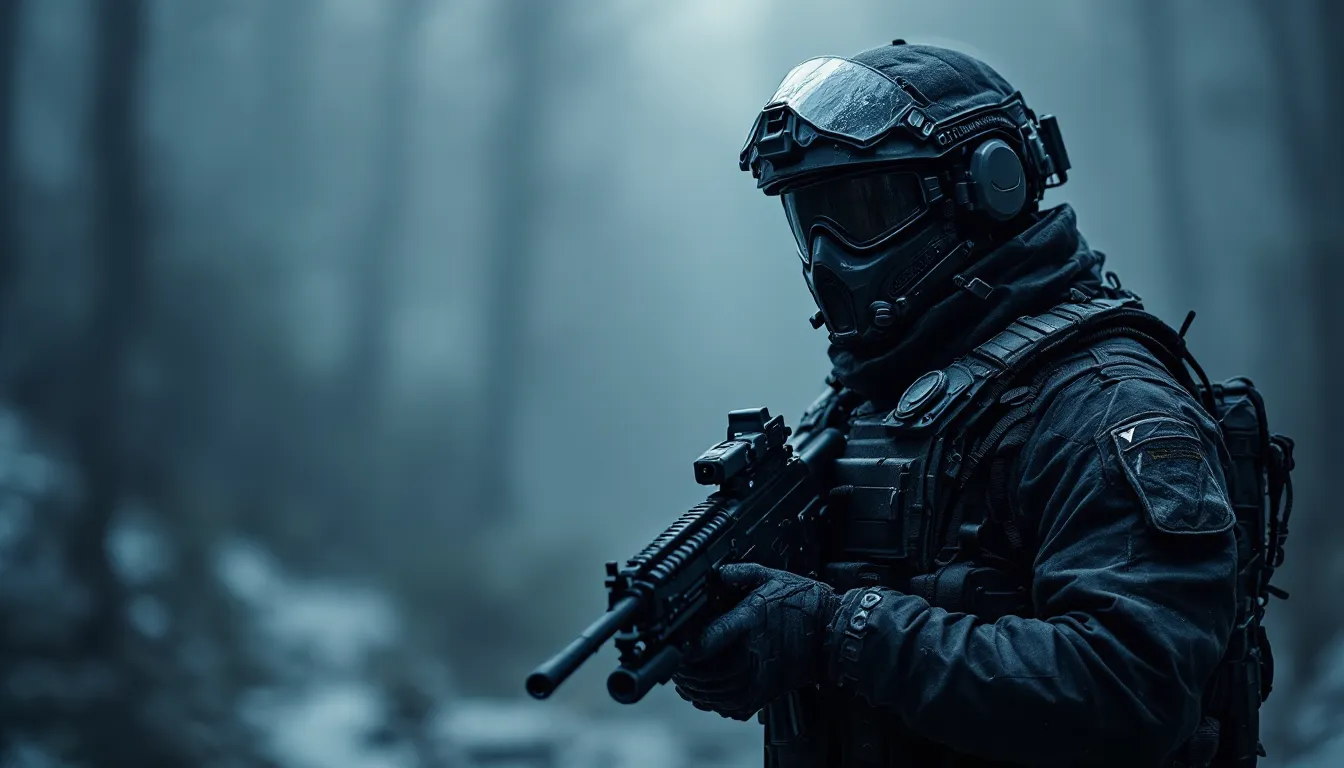
Spec Ops has carved out its own identity within the Call of Duty franchise as the mode where skill, strategy, and teamwork collide under punishing difficulty. Whether you’re tackling covert missions solo or coordinating with a squad, understanding the mechanics, loadouts, and tactics that define this mode separates operators who survive from those who get extracted feet-first. This guide breaks down everything you need to know to dominate Call of Duty Spec Ops in 2026, from mission fundamentals to progression systems and platform-specific variations.
Table of Contents
ToggleKey Takeaways
- Call of Duty Spec Ops is an elite difficulty mode where skill, strategy, and teamwork are essential to complete objective-based missions like hostage extraction, demolition, and survival.
- Solo runs offer complete control over pacing and decision-making, while co-op squads of up to four operators can execute coordinated assaults and leverage revive mechanics for greater survivability.
- Loadout optimization and role-specialization—such as anchor players with LMGs, flankers with SMGs, and support players with utility equipment—directly determine squad effectiveness and mission success.
- Positioning, suppressing fire, and cover depth are critical to surviving enemy encounters, as Spec Ops AI uses intelligent cover tactics and flanking coordination that punish rushing or poor map awareness.
- Progression systems reward cosmetics, achievements, and tier-based challenges tied to difficulty completion, with Nightmare cosmetics signaling genuine competence and providing long-term engagement goals.
- Communication breakdowns cascade into team wipes, so establish clear roles, call out specific threats with direction and distance, announce objective progress, and coordinate revive priority before each mission.
What Is Spec Ops In Call Of Duty?
Spec Ops is Call of Duty’s dedicated special operations game mode, essentially a set of structured, objective-based missions designed for elite difficulty and coordinated gameplay. Unlike campaign, which follows a linear narrative, Spec Ops puts players into isolated combat scenarios with explicit tactical goals: extract hostages, plant charges, secure intel, eliminate high-value targets, or survive waves of enemies.
The mode thrives on environmental awareness and adaptive strategy. You can’t brute-force your way through Spec Ops the way you might in multiplayer. Every enemy placement matters, every piece of cover serves a purpose, and rushing inevitably ends with a respawn timer burning away precious seconds.
Spec Ops has evolved across Call of Duty titles. The original Modern Warfare (2009) introduced straightforward co-op missions with difficulty multipliers. Modern Warfare (2019) pivoted toward larger-scale operations with branching objectives. Current iterations in titles like Modern Warfare III emphasize dynamic encounters, environmental hazards, and RNG-influenced spawns that keep runs unpredictable even on familiar maps.
The mode appeals to players who want more than deathmatch carnage but less narrative hand-holding than campaign. It’s tactical without being a full tactical shooter, intense without requiring esports-level mechanical skill (though reflexes certainly help), and rewarding in a way that keeps squads coming back for “one more run” at 2 AM.
Game Modes And Mission Types Explained
Solo And Cooperative Gameplay
Spec Ops supports both solo operations and squads of up to four operators. Solo runs are genuinely harder, you absorb all enemy aggression and can’t leverage revive mechanics or flanking advantage of multiple players. But, solo offers something co-op doesn’t: complete control over pace and decision-making. You dictate when to push, when to hold, when to reposition.
Co-op fundamentally changes the experience. A four-person squad can execute coordinated assaults, cover multiple angles simultaneously, and trade revives under fire. Squad dynamics matter enormously. One player focuses suppressing fire while another flanks. A third manages objective placement. A fourth maintains rear security. Roles emerge naturally or, in competitive squads, deliberately.
Difficulty scales with player count, so solo Veteran isn’t necessarily easier than Veteran with two operators. The game adjusts enemy density and aggression relative to how many guns are on the map. That said, raw numbers favor squads, more firepower, more utility, more redundancy.
Mission Objectives And Difficulty Levels
Each Spec Ops mission chains together 3–5 objectives, though some variants introduce branching paths or secret intel locations. Common objective types include:
- Elimination: Clear all enemies from a designated zone, often with waves respawning after successful kills.
- Extraction/Escort: Move from point A to point B while protecting an NPC or defending a slow-moving asset.
- Demolition/Hacking: Plant explosive charges or access secured terminals under enemy fire.
- Hostage Recovery: Secure and extract a VIP while managing threat levels.
- Survival: Endure enemy waves for a fixed duration, with spawns intensifying over time.
Missions scale across five difficulty tiers: Recruit, Regular, Hardened, Veteran, and Nightmare. Recruit trains reflexes without punishment, respawns are quick and enemy accuracy is forgiving. Nightmare demands flawless execution: permadeath, limited loadout flexibility, and enemies with lethal accuracy and coordinated tactics.
Most players find Veteran the sweet spot for challenge-to-reward ratio. Nightmare is genuinely prestige territory, you’re aiming for bragging rights rather than efficient progression. Patch updates occasionally rebalance enemy scaling or objective pacing, so what felt balanced three months ago might require tactical adjustment now.
Essential Tips And Strategies For Success
Loadout Optimization And Weapon Selection
Your loadout in Spec Ops directly determines your effectiveness. Unlike multiplayer where meta shifts every season, Spec Ops reward consistency and role-specialization.
Primary Weapon Considerations:
Select a rifle with acceptable range and recoil control. The GPMG-7 and XM4 dominate assault roles because they handle headshot-dependent encounters and maintain accuracy at medium range. If you’re the designated support player, consider LMGs like the GPMG-9, their magazine capacity keeps sustained fire flowing during sustained enemy pushes, though they sacrifice mobility.
Sniper rifles require extreme positioning discipline. A single LW3A1 Frostline shot eliminates threats from unexpected angles, but you’re defenseless if enemies flank or charge. Reserve sniping for high-ground positions where you can track entry points.
Shotguns excel in tight indoor scenarios but become liability on open maps. Use them only if the mission layout supports close-quarters fighting.
Secondary And Utility Setup:
Your secondary weapon should cover your primary’s weakness. Pairing a rifle with a pistol wastes a slot, instead, equip a Akimbo Makarov or Makarov PM for emergency last-resort stopping power, or grab a tactical shotgun if your primary is a sniper.
Equipment selection hinges on role clarity. Designated anchors benefit from C4 for objective demolition and area denial. Aggressive flankers use Throwing Knives to eliminate single targets silently and Smoke Grenades to break line-of-sight. Support players carry Lethals for crowd control and Stun Grenades to disable groups before teammates push.
Perks matter more in Spec Ops than multiplayer because encounters are longer and positioning mistakes are terminal. Quick Fix provides health regeneration after eliminations, Double Time extends tactical sprint duration for repositioning, and Ghost breaks enemy intel tools (less critical co-op but valuable solo).
Positioning And Enemy Management
Spec Ops enemies are markedly smarter than multiplayer AI. They use cover intelligently, flank in coordinated groups, and adjust targeting based on perceived threat level. Rushing from spawn is a death sentence.
Fundamental Positioning Rules:
Always hold vertical or range advantage. If enemies own high ground, you’re trading shots at a disadvantage, their bullets have shorter drop, their sight lines are broader. Reposition immediately. If you’re forced into open ground, move diagonally to minimize time in crosshairs. Stop-start movement gets you killed: smooth, unpredictable repositioning keeps you alive.
Use cover depth. Don’t crouch behind a thin wall thinking it offers protection. Map awareness reveals hard cover (concrete barriers, vehicles, structural elements) versus soft cover (bushes, fences, thin walls). Hard cover stops bullets: soft cover conceals position. Use both layers, soft cover to hide, hard cover to survive fire.
Employ suppressing fire before advancing. One player pins down enemies while another rotates around their flank. Without suppression, you’re running into optimal firing lines. Coordinate timing: suppressor calls out “covering left, push right”: flanker advances, eliminating that exposure window.
Detect enemy spawn patterns. Early objectives usually trigger initial waves from static locations. Stick back from objective zones slightly, scan for spawning enemies, engage before they establish firing positions. As mission difficulty climbs, spawns randomize, but even random spawns follow directional tendencies.
Teamwork And Communication In Co-Op
Squad communication separates professional runs from chaotic wipes. Establish role clarity before spawning. “I’m anchor with LMG, holding rear,” “I’ve got SMG flanker,” “I’m on objective pace.” Clear roles prevent duplicate functions and identify capability gaps.
Call out incoming threats immediately. “Enemies left, behind the truck, two targets” is infinitely more useful than “contact left.” Include direction, distance estimate, and enemy count. That specificity lets teammates mentally model the threat and plan response. Use cardinal directions or map callouts consistently so everyone interprets references identically.
Announce objective progress clearly. “Charge one planted, two remaining,” “Hostage secure, moving to extraction,” “Thirty seconds on timer, hold position.” These updates align squad tempo and prevent wasted movement.
Manage resource calls. If you’ve burned three revives and two remain, communicate scarcity. High-value players (sniper, objective specialist) receive priority if squad needs to choose. Downed players should ping position or direct rescue approach: “I’m in the corner, cover from main entrance.”
Communication breakdowns cascade into team wipes. One player doesn’t know the second is flanking, so they panic-revive at wrong time. Third player thinks they’re holding while fourth pushes objective prematurely. Establish patterns, callout timing, revive priority, objective approach routes, and rehearse them so execution becomes automatic.
Unlocks, Rewards, And Progression System
Earning Cosmetics And Achievements
Spec Ops progression feeds into your broader Call of Duty cosmetic library. Completing missions earns operator skins, weapon blueprints, and cosmetic rewards tied to achievement tiers. Higher difficulties yield rarer cosmetics: Nightmare completions unlock items you can’t obtain elsewhere.
Achievements function as skill gates. Cosmetics tied to solo Nightmare runs signal genuine competence. Teammates sporting those rewards have proven they can operate independently under maximum pressure. In squad environments, Nightmare cosmetics are shorthand for “I trust this player’s fundamentals.”
Seasonal events introduce limited-time cosmetics exclusive to Spec Ops. These operate on expiration timers, miss the season, miss the cosmetic permanently (or wait for seasonal reruns). Competitive players who value visual exclusivity prioritize these over casual cosmetics.
Weapon blueprints from Spec Ops carry unique advantages sometimes. A blueprint might include slightly optimized attachments or visual distinctiveness that gives psychological edge. You’re not getting gameplay advantage (blueprints are cosmetic), but seeing unusual weapon skins in your loadout feels special.
Challenge completions unlock cosmetics directly. “Eliminate 50 enemies with sniper rifles,” “Complete all missions on Veteran,” “Rescue 20 hostages”, these granular achievements reward playstyle diversity and encourage replaying content through different lenses.
Tier-Based Challenges And Hidden Secrets
Spec Ops implements a tiered challenge system where progression unlocks new objectives and secret intel locations. Early tiers introduce straightforward mission completions. Later tiers demand specific performance metrics: complete extraction in under eight minutes, don’t let any objectives fail, eliminate specific high-value targets.
Secret intel scattered throughout maps rewards exploration. These aren’t marked on HUD: you find them through methodical map scanning or squad coordination. Collecting all intel in a mission unlocks cosmetics and lore snippets, but more importantly, intel sometimes reveals mission secrets, alternate paths, hidden weapon caches, or environmental hazards that offer strategic advantage.
Hidden mechanics reward experimentation. Some maps contain interactive environmental elements (alarm systems, gas leaks, turret controls) that aren’t explicitly required but dramatically shift encounter difficulty if exploited strategically. Disabling alarm systems prevents reinforcement waves: triggering gas vents force enemy repositioning: activating turrets provide suppressing fire.
Tier progression creates long-term goals. Casual players grind toward cosmetics. Hardcore players target tier completion for prestige. Speedrunners optimize routes and loadouts to minimize completion times. The system accommodates multiple playstyles within the same mode.
Recent Call of Duty Updates have occasionally rebalanced challenge difficulty, shifting which objectives offer efficient progression pathways. Check patch notes before grinding heavily toward specific unlocks, as balance changes can alter farming efficiency.
Common Mistakes To Avoid
Ignoring equipment synergy. Players equip lethals and tacticals without considering squad loadout overlap. If all four squad members carry stun grenades, you’re wasting three slots. Diversify utility: one player brings C4, another brings smokes, another brings stuns. That coordination multiplicatively amplifies effectiveness compared to redundant setups.
Tunneling on primary objective before clearing threats. It’s tempting to sprint to objective markers and activate them immediately. Enemies flowing into that zone create crossfires where you’re pinned. Establish security perimeter first, clear approach routes, establish firing positions, confirm threat level, then proceed with objective. Twenty-second delay prevents catastrophic squad wipe.
Pushing aggressively when low on ammo or health. Desperation-pushing with three bullets and one armor plate is panic play. Reposition toward teammates, request cover fire, allow regeneration, scavenge enemy drops. Staying alive matters more than eliminating individual threats. One alive operator completes objectives: four dead operators fail missions regardless of enemy body count.
Neglecting communication because headset broke or voice is disabled. Text chat or squad callouts through game audio are insufficient. Invest in a functional headset. Communication latency directly impacts survival, by the time you type a callout, that threat’s already crossed half the map.
Assuming higher difficulties are always harder. Sometimes Veteran and Nightmare share enemy density but differ in accuracy/aggression scaling. Running same tactics that worked on Veteran frequently fails on Nightmare because enemies demand positioning-perfect gameplay. Study difficulty-specific behavior: are they shooting faster, moving smarter, or just hitting harder?
Setting unrealistic difficulty progression. Jumping from Hardened to Nightmare after two runs gets you killed repeatedly. Progress through regular difficulty increments: Hardened → Veteran (play until comfortable) → Nightmare. Grinding specific missions on Veteran teaches enemy patterns and map control before Nightmare tests your optimization.
Forgetting that RNG influences spawns and loot drops. Some runs will spawn enemy waves from unexpected angles. Some runs enemies will have superior weapon loadouts. Accept that randomness exists and adapt loadout flexibility, carry weapons viable against multiple threats rather than optimizing for single optimal scenario.
Resources from Dexerto frequently document emerging meta strategies and common failure patterns across different Call of Duty titles, offering real-time perspective on what’s working competitively.
Spec Ops Across Different Call Of Duty Titles
Modern Warfare And Warzone Integration
Modern Warfare (2019) established the foundation for contemporary Spec Ops design. Its Operation Chaos series introduced branching mission structures where player decisions determined objective sequence. Disarm a bomb or defend the area? Plant charges or pursue the target? These choices meant different encounter arrangements and difficulty curves. Early 2024 iterations saw refined enemy scaling and environmental variety. By mid-2024, the mode stabilized around four primary mission types with cosmetic cosmetics tied to difficulty completion.
Modern Warfare III (2023) integrated Spec Ops more tightly with Warzone, allowing cosmetics earned in Spec Ops to deploy in battle royale environments. This cross-progression incentivized grinding both modes. A player grinding Nightmare Spec Ops missions would earn cosmetics to flaunt in Warzone squads.
Warzone integration means meta weapons in Spec Ops often mirror competitive Warzone loadouts. Weapons receiving buffs in Warzone updates later perform better in Spec Ops. The Call of Duty Modern Warfare article covers tactical nuances specific to Modern Warfare’s multiplayer, though principles translate to Spec Ops weapon selection.
Map familiarity from Warzone occasionally transfers into Spec Ops. Veterans of Verdansk recognize extraction zones, understand sightline coverage, and recognize high-probability ambush locations. That transferred knowledge provides advantage.
Black Ops And Other Franchise Variations
Black Ops Cold War (2020) presented Spec Ops with narrative framing tied to the campaign’s espionage theme. Missions required intel gathering, sometimes prioritizing stealth over gunplay. Loadout customization was more restricted, you couldn’t freely mix-and-match attachments the way Modern Warfare permitted. The Black Ops Cold War plot deepens understanding of mission context.
Black Ops 6 refreshed the formula with emphasis on loadout flexibility and objective variety. The mode supports traditional squad co-op and introduced solo-specific variants where you command AI teammates with limited autonomy. Performance on AI teammate commands unlocks unique cosmetics unavailable in standard co-op runs.
Each Black Ops iteration employs different progression mechanics. Cold War used traditional tier systems: later iterations incorporated seasonal battle pass integration where Spec Ops challenges contribute to overarching season progression. Understanding which title’s Spec Ops you’re playing matters because progression mechanics vary substantially.
Platform Variations: Call of Duty on PS4 sometimes receives exclusive cosmetics or occasionally slightly different balance tuning relative to PC versions, though this is rare in recent titles. PC players typically access Spec Ops content simultaneously with console releases.
Artillery-focused guides from The Loadout periodically compare how specific weapons perform across different Call of Duty Spec Ops implementations, useful if you’re switching between titles.
Cross-progression between titles is limited. Cosmetics earned in Cold War don’t transfer to Modern Warfare. But, account progression (player level, battle pass tiers) sometimes syncs across titles if you’re actively subscribed to seasonal content. Verify your title’s specific progression rules before investing heavily in cosmetics expecting cross-title transfer.
Competitive Spec Ops leagues occasionally emerge around specific titles. 2025–2026 saw growing interest in Nightmare difficulty leaderboards, with professional squads streaming marathon runs attempting world-record times. If competitive Spec Ops interests you, focus on whichever title currently hosts active competitive scenes, typically the newest release.
Conclusion
Mastering Call of Duty Spec Ops requires understanding mission mechanics, optimizing loadouts for your designated role, executing disciplined positioning, and communicating flawlessly with teammates. The mode rewards preparation and punishes improvisation. Each difficulty tier introduces meaningful escalation: Veteran demands competent fundamentals: Nightmare requires near-flawless execution and advanced threat prediction.
Progression systems ensure long-term engagement, cosmetics unlock gradually, challenges encourage playstyle diversity, and tier completion supplies persistent goals. Whether you’re grinding exclusively for cosmetics or chasing Nightmare prestige, Spec Ops offers scalable challenge matching your commitment level.
The landscape continues shifting with seasonal updates and balance patches. Current meta favors flexible loadouts prioritizing accuracy over raw damage. Upcoming patches may rebalance weapon effectiveness or enemy spawning patterns, so revisit meta periodically. Community resources from ProSettings track competitive configurations and gear setups used by professional players, offering optimization insights for equipment sensitivity and controller settings.
Eventually, Spec Ops succeeds because it demands more than pure gunplay, it requires tactical thinking, team coordination, and adaptive strategy. Treat each mission as a puzzle to solve rather than waves to survive, and progression becomes inevitable. Get out there and extract successfully.